





Compliant & Reliable

Advanced Technology

Durable & Built to Last

Custom Sign Solutions

End-User Focused

Braille Tactile Signs Aust. Delivers Compliant, Durable Braille Tactile Signs Designed for Real-World Environments
At the heart of our work, is a simple goal - to create quality Braille Tactile Signs and accessible services people can rely on, and support independence everyday. That is the Gold Standard.
We support you to get it right from the start, making the process clear, efficient, and easy to navigate. We support architects, designers, access consultants, and project teams with practical guidance to ensure signage meets both compliance requirements and real-world use.
Browse our Braille Tactile Sign Solutions

Standard Range BTS
Fast Project Delivery
26 Colour Variants Ready-to-Order. Designed for Compliance, Reliability, Consistency, and Long-Term Performance. Thousands to Choose From.

Customise Standard Range BTS
Easy Custom Solutions
Utilise Proven Designs and Customise Colours, Text, Logos, and Finishes to Suit Your Brand and Project Requirements.

Fully Custom & Bespoke BTS
Custom With Confidence
Solutions Designed, Specified, and Manufactured to Align with Your Project Vision, Objectives, and Environment.
Shop 1,000s of Standard Range Signs


Supporting our Clients & Partners
We work alongside our clients and project partners to help simplify complex projects, support informed decisions, and deliver reliable outcomes with confidence.
Through collaboration, specialist guidance, and a solutions-focused approach, we help protect project integrity, stakeholder confidence, and long-term brand reputation.
Supporting Community Through Partnership
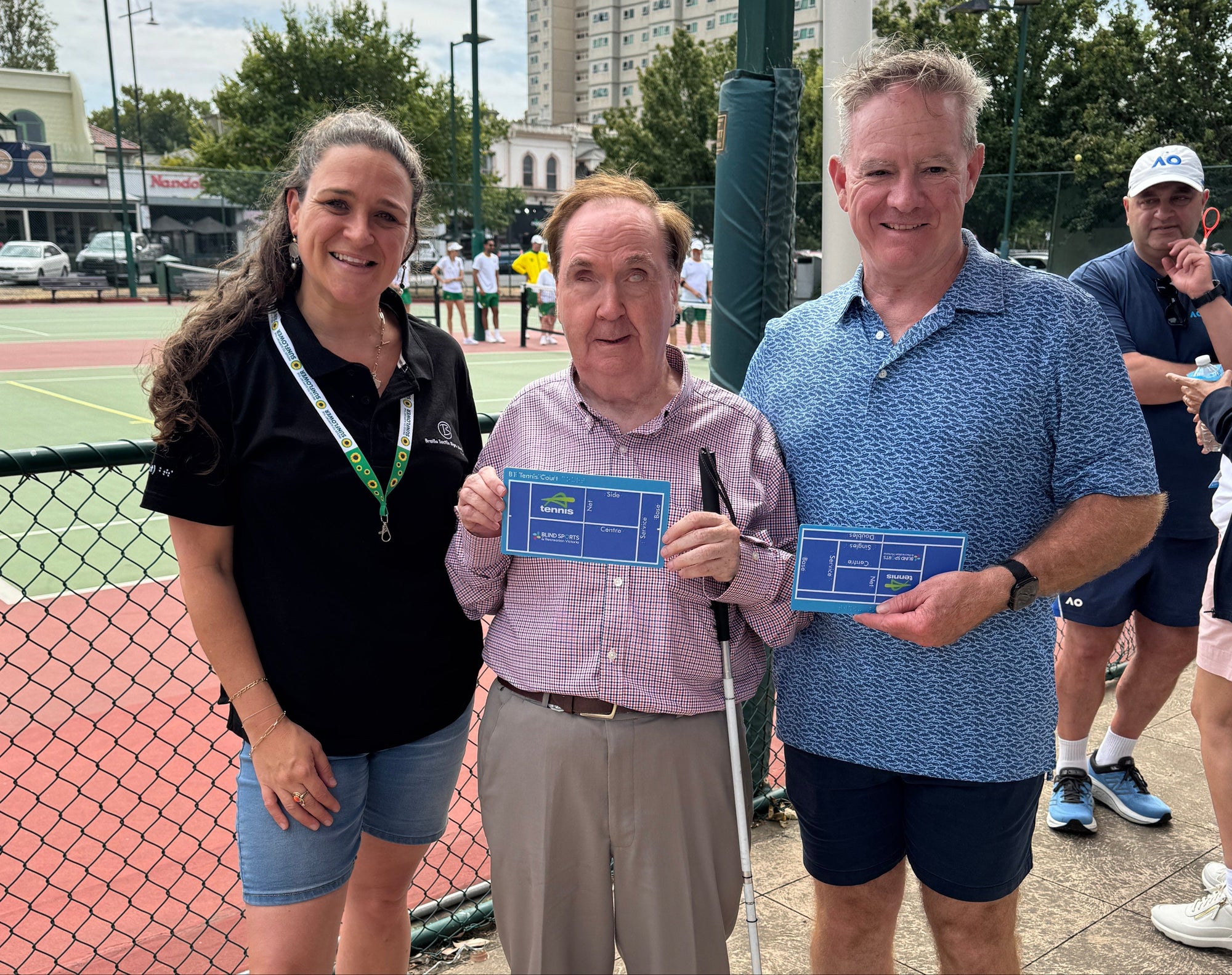
We believe the strongest outcomes come from listening, learning, and working alongside the communities we support. Through partnerships, collaboration, and shared purpose, we help create more inclusive environments and meaningful experiences, with a strong focus on supporting people who are blind or have low vision.
Our Services
More than Just Signage
Supporting informed decisions through specialist guidance, education, and real-world industry and community experience.
Our Consultancy and CPD Education services help teams specify with confidence and support architects, designers, builders, and consultants to create more accessible environments with confidence.

Consultancy
Design & Wayfinding
Supporting you from concept through to completion, our services cover design development and layout execution, wayfinding strategy and planning, and collaboration across your project team.

Upskill
Education & CPD
Building confidence through knowledge, we offer CPD presentations, standards and compliance guidance, and practical, real-world application.
Real Feedback. Proven Results.
"Their product has proven itself time and again in tough, high-traffic environments. It's clear why they come so highly recommended by other industry leaders and access consultants. They've earned our trust and continue to deliver at every level."

"I can attest that Braille Tactile Signs Aust. is one of the most reliable suppliers that I’ve dealt and would want to continuously be dealing with."

"BTS Aust. are a fabulous and very reliable company to work with, always a great help with any job we bring to them, with great industry knowledge. The best quality products and technology, with signs that stand the test of time, and that look amazing."

"The high level of communication from the beginning and the understanding of the design process ensured BTS Aust. would go to any length to deliver the order to specification and on programme."

"Braille Tactile Signs Aust. lead the way in Braille signs. Deakin University have utilised BTS Aust. Products for many years because of their consistency, robustness and longevity."


Explore Our Featured Projects
Supporting projects where quality and reliability matter. Braille Tactile Signs Aust. works across multiple sectors, including transport, infrastructure, healthcare, education, commercial, and public environments. Our signage is used in spaces where performance, compliance, and presentation are critical.

Royal Children’s Hospital, Melbourne
Design-led wayfinding delivered with precision, performance, and care. The Relationship Braille Tactile Signs Aust. was engaged by Diadem to manufacture the Braille Tactile Signs for the new Royal Children’s Hospital Melbourne. The project required close collaboration to support a highly considered design outcome, with a strong focus on consistency, colour integration, and delivery within a complex and tight construction programme. The Project The Royal Children’s Hospital is one of Australia’s leading paediatric healthcare facilities, designed to create a welcoming and engaging environment for patients, families, and staff. Following more than seven years of planning and construction, the new hospital was officially opened in 2011, representing a significant investment in healthcare infrastructure and patient experience. The signage formed part of this broader vision, contributing to wayfinding that is both functional and aligned with the architectural design. The hospital was officially opened by Her Majesty Queen Elizabeth II, marking its significance as a landmark project where only the highest standards of quality, design, and performance were expected. The Outcome Braille Tactile Signs Aust. manufactured signage across the facility, supporting a consistent and cohesive approach throughout.The outcome included: • Custom Colour Combinations Aligned to Each Level of the Hospital• Consistent Sign Formats and Layouts Throughout• Integration with the Broader Interior Design Palette• Reliable Delivery Within a Demanding Project Timeline The signage supports clear navigation while contributing to the overall environment and experience of the hospital. The Value Over Time Healthcare environments require signage that performs consistently over time. CSE_Tech (Continuous Surface Encapsulated) was selected for its suitability in high-use environments, supporting: • Hygienic, Easy-to-Clean Surfaces• Durability Under Frequent Cleaning and Use• Long-Term Performance Without Deterioration By maintaining consistency in core tooling and applying controlled variations through colour, the project achieved both efficiency in production and flexibility in design. Project Highlights • Major Healthcare Facility with Complex Wayfinding Requirements• Design-Led Signage with Level-Specific Colour Systems• Consistent Manufacturing Approach Across Large Volumes• Use of CSE_Tech for Hygiene and Durability• Coordinated Delivery Within a Tight and Evolving Programme Client Experience “BTS Aust. was engaged by Diadem to manufacture the Braille signage for the New Royal Children's Hospital project in Melbourne. The scope included custom designs and a series of PMS colour combinations for each level. A late schedule change from the client compounded an already tight programme. The high level of communication from the beginning and the understanding of the design process ensured me that Claudia and the team at BTS Aust. would go to any length to deliver the order to specification and on programme. The signs were delivered on time, looked fantastic and the client was very happy. I look forward to working with BTS Aust. in the future and would recommend them to anyone who expects the best in service and quality.” - Diadem Continuing Partnership This project reflects Braille Tactile Signs Aust.’s ability to support large-scale, design-led environments where performance, compliance, and consistency are critical.
Read more
NDIS / NDIA Signage Program
Consistent Solutions For Scalable Environments Braille Tactile Signs Aust. supports environments aligned with National Disability Insurance Agency (NDIA), delivering compliant Braille Tactile Signs designed for consistency, usability, and ongoing project rollout. Our approach focuses on providing practical, repeatable solutions that support multiple fit-outs across locations. The Relationship Braille Tactile Signs Aust. supported the initial design development of the Braille Tactile Sign range, as well as the ongoing rollout and ordering across multiple locations. This approach reflects an understanding of the need for reliable, repeatable solutions that can be implemented efficiently over time. The Outcome Our Braille Tactile Signs are designed to support accessible, functional environments, with a focus on usability and consistency across spaces. The signage range includes desk identification, locker numbering, and kitchen and amenity labelling, supporting clear navigation and day-to-day use within workplace environments. Value Over Time Quality is proven over time. In environments with ongoing rollout and repeat requirements, durability, hygiene, and consistency are critical. Braille Tactile Signs Aust. focuses on delivering continuous surface signage solutions that support long-term performance, enabling reliable use across multiple locations and over extended periods. Project Highlights Braille Tactile Signs Aust. developed a structured Braille Tactile Sign range to support ongoing fit-outs across multiple locations. Our involvement included: Initial design development and compliance support Establishment of a structured signage range and layouts Ongoing production and ordering aligned to project rollout This includes: Desk and locker numbering systems Kitchen and amenity signage (including coffee, tea, fridge, freezer, cups, and utensils) Standardised layouts designed for consistency across sites Tooling and a structured signage library were established to support efficient ordering and repeatability, enabling consistent rollout across projects. This range of signage was produced using continuous surface encapsulated technology (CSE_Tech™), selected for its durability, hygiene, and suitability for ongoing use. The signage is supplied as a simple peel-and-stick solution, supporting ease of installation across multiple environments. Continuing The Engagement We value the opportunity to support environments aligned with NDIS / NDIA and the role these spaces play in supporting accessibility and inclusion. We look forward to continuing to support future fit-outs with the same focus on consistency, reliability, and ease of use.
Read more
NextSense, Macquarie University Project
Partnership Built On Trust And Performance Braille Tactile Signs Aust. is proud to have contributed to the NextSense facility at Macquarie University, a purpose-built, state-of-the-art environment supporting education and services for people with hearing and vision loss. Working alongside the design and delivery teams, we provided compliant Braille Tactile Signs that support accessibility, usability, and the integrity of this highly considered environment. The Relationship Braille Tactile Signs Aust. worked in collaboration with BrandCulture during the design and specification stage, supporting the selection of appropriate signage solutions aligned with the project requirements. National Sign Build delivered the signage package, with a clear focus on achieving the best possible outcome for the project. Through this process, careful consideration was given to material selection and performance, with the decision made to proceed with the specified solution to support long-term reliability and project integrity. This collaborative approach ensured alignment across design, specification, and delivery. The Outcome Our Braille Tactile Signs were designed and manufactured to align with the high standards of this purpose-built facility, supporting compliance, durability, and a considered visual outcome. Through detailed design development and attention to detail, we supported the delivery of signage that integrates seamlessly into the environment, contributing to both functionality and aesthetics. Value Over Time Quality is proven over time. Throughout the project, detailed design review and proofing processes identified and resolved potential design considerations prior to production. This approach ensured the correct outcome was achieved the first time, avoiding unnecessary rework, additional cost, and material waste, and supporting a more efficient and reliable project delivery. Project Highlights Braille Tactile Signs Aust. provided a full-service approach, supporting design, compliance, proofing, proto-typing, and project coordination across multiple stages of the project. Our involvement included reviewing design documentation, identifying potential compliance and layout considerations, and working closely with project teams to resolve these prior to manufacture. Close collaboration with the project manager and delivery teams supported a smooth and coordinated rollout, ensuring the outcome reflected the intent and standard set from the outset. Client Experience “We’re proud to feature beautifully designed Braille Tactile Signs by Braille Tactile Signs Aust. at our purpose-built centre for innovation at Macquarie Park, on the Macquarie University campus. These signs form part of our ongoing commitment to accessibility, inclusion, and creating spaces that support people to thrive.” - NextSense See our work for NextSense on LinkedIn. Continuing The Partnership We value the opportunity to contribute to projects such as the NextSense facility, where accessibility, design, and functionality are equally important. We acknowledge the collaborative effort across all teams involved and look forward to continuing to support projects that prioritise quality, reliability, and long-term performance.
Read more
Commonwealth Bank of Australia (CBA)
A Trusted Engagement Focused on Performance Braille Tactile Signs Aust. is proud to support Commonwealth Bank of Australia across its national network, delivering compliant Braille Tactile Signs that align with the expectations of a leading Australian brand. Our role is to provide durable, reliable signage solutions that support consistency, usability, and long-term performance across a wide range of environments. The Relationship Our relationship with CBA began through their Victorian managing contractor, Whytehall Services, who identified the need for a more durable and reliable signage solution. With a clear understanding of available technologies, Whytehall Services made the decision to implement our Gold Standard Continuous Surface Encapsulated technology (CSE_Tech™), supporting improved durability, hygiene, and long-term usability. Over time, this approach established a consistent and reliable foundation within the Victorian network. The Outcome Following proven performance over time, Braille Tactile Signs Aust. was engaged directly by CBA to support the development and refinement of a national signage range. Working collaboratively with CBA and Equal Access Group Pty Ltd, the signage was reviewed and certified through a structured process, including: Design compliance certification Product compliance certification This resulted in a compliant, standardised Braille Tactile Sign range which continues to be implemented across the national network. Value Over Time Quality is proven over time. Through real-world application, the importance of durable, well-specified signage became evident, particularly in maintaining consistency, usability, and brand presentation across multiple environments. Braille Tactile Signs Aust. focuses on delivering solutions that perform consistently over time, supporting long-term reliability, user confidence, and value beyond the initial investment. Project Highlights Braille Tactile Signs Aust. supported the development of a national signage system, including design, compliance, and production of a comprehensive Braille Tactile Sign range. This includes: Trading hours signage ATM and operational signage Amenity signage Site-specific applications Each sign type is supported by a structured library and inventory system, enabling consistent ordering across managing contractors nationally. Our ongoing role includes maintaining and expanding the signage range, managing design updates, and supporting coordination across multiple stakeholders to ensure consistency and quality are maintained. Continuing The Partnership We value our ongoing relationship with CBA and their selected managing contractors, and the trust placed in us to support their national signage requirements. We look forward to continuing to work collaboratively with CBA and their managing contractors to deliver consistent, reliable, and compliant outcomes across their network.
Read more
Explore Our Gallery
Speak With Our Team About These Projects or Let's Discuss Your Project Needs.


Braille Tactile Signs Are a Critical Part of How People Navigate and Experience a Space. Getting Them Right Matters.
We support you through the process, helping you make informed decisions and achieve the right outcome with confidence.
- Designed for Real-World Use
- Built for Durability and Long-Term Performance
- Aligned with Australian Standards and NCC Requirements
- Supporting Independence, Safety, and Usability
It’s a choice you can feel confident in, and proud to stand behind.
Explore More on our BTS Aust. Blog

World Sight Day Forum 2026
Together Towards Inclusive Experiences On 17th September 2026, Braille Tactile Signs Aust. hosted our third World Sight Day Breakfast Forum, at the Melbourne Convention and Exhibition Centre. Held in the lead-up to global World Sight Day on Thursday 8th October, our annual Melbourne Breakfast Forum forms part of the broader #LoveYourEyes conversation led by the International Agency for the Prevention of Blindness (IAPB). Guided by the theme Together Towards Inclusive Experiences, the Forum brought together people with lived experience, community organisations, business, government, education and industry and corporate Australia to connect, listen and consider how our everyday decisions can create more accessible and inclusive experiences. The conversations, connections and energy throughout the Forum and exhibition space reflected exactly why we created this event three years ago. Connecting People. Bridging Perspectives. Creating Pictured Above: Keynote Speaker Khoa Nguyen, Orthoptist, Guide Dogs Victoria. Watch the Highlights Watch the highlights from our World Sight Day Breakfast Forum and experience some of the conversations, connections and moments shared throughout the morning. Why World Sight Day Matters World Sight Day reminds us of the importance of loving our eyes, protecting our eye health and ensuring access to appropriate eye care. Our World Sight Day Breakfast Forum is held in the lead up to this important global day, creating an opportunity to connect lived experience with the people who design, specify, build, employ and make decisions that shape our communities. For Braille Tactile Signs Aust., World Sight Day is also an opportunity to look beyond compliance and bring understanding to the humanity behind accessibility. Everyone should be able to navigate, participate and contribute with confidence and independence. Achieving this requires more than one product, profession or organisation. It takes lived experience, specialist knowledge and genuine collaboration. Learn more about global World Sight Day and IAPB #LoveYourEyes campaign. Pictured Above: A blind guest uses our Braille Tactile Map of the Event Venue to familiarise herself with the location. Pictured Above: An attendee experiencing Vision Australia's 'See Like Me' virtual reality glasses. Pictured Above: Jonathan Craig (Vision 2020) speaking with Kaye Jones and Erin Goedhart (Guide Dogs Victoria). A Morning of Connection and Conversation Our speakers brought together perspectives from eye health, lived experience, inclusive employment, accessible environments, sport, recreation and community participation. We were privileged to hear from: Khoa Nguyen, Orthoptist, Guide Dogs Victoria Doug Sloan OAM, Ambassador, Blind Sports & Recreation Victoria Kaye Jones, Guide Dogs Victoria Rebecca Webbern, CVGT Employment Terry O’Neill, Link Vision – Blind Australian of the Year Awards Maurice Gleeson OAM, Blind Australian of the Year 2025 – Current Claudia Gatt, CEO and Co-Founder, Braille Tactile Signs Aust. Rob Fletcher, President, Blind Sports & Recreation Victoria Together, our speakers shared knowledge, personal experiences and practical ideas that encouraged everyone in the room to consider the role they can play in creating change. Pictured Above: Keynote Speaker Maurice Gleeson OAM, Blind Australian of the Year 2025. Pictured Above: Keynote Speaker Claudia Gatt and Roland Gatt, Braille Tactile Signs Aust. Messages From Our Speakers Khoa Nguyen, Orthoptist, Guide Dogs Victoria Khoa reminded us that loving our eyes starts with how we care for our whole body. Good nutrition, regular exercise and healthy everyday choices can support our eye health, bringing the ‘Love Your Eyes by IAPB’ message directly into our daily lives. A simple but powerful message: our eye health deserves our attention before there is a problem. Doug Sloan OAM, Ambassador, Blind Sports & Recreation Victoria Doug Sloan OAM shared a powerful and humorous story of determination, self belief and opportunity following the loss of his vision. From ruling out bricklaying to discovering a successful career in sales, and ultimately a long career with the Australian Trade Commission. Doug reminded us of the power in believing in ourselves and too, to surround ourselves with people who believe in us and, above all, to focus on what is possible, not simply what isn’t. Doug’s message of being “unstoppable” captured his approach to life: determination, self belief and refusing to allow vision loss to define what is possible. Kaye Jones, Guide Dogs Victoria Kaye reminded us that inclusion begins with understanding the person, their capabilities and the environment around them. Through her own career story, inviting attendees on an immersive journey into navigating without vision, and her passion for recognising people’s strengths, she challenged employers to see possibility and understand that support is available to turn opportunity into meaningful employment. Kaye spoke about the different strengths and superpowers people who are blind or have low vision can bring, challenging us to look beyond perceived limitations and recognise the individual, their capabilities and potential. Rebecca Webbern, CVGT Employment Bec showed us how intention can become action. A conversation at last year’s BTS Aust. WSD25 Forum led to CVGT Employment and Guide Dogs Victoria working collaboratively with BTS Aust. to support us in welcoming our first team member who is blind, further strengthening our diverse and inclusive team. Their support extended across our new employee, our business and our broader team, demonstrating what is possible when we connect with the right support. The message was simple: with the right support, workplaces can learn, adapt and create meaningful opportunities for everyone to thrive. Kaye + Bec: Better Together Together, Kaye and Bec demonstrated the power of collaboration. Their organisations bring different expertise to the employment journey, supporting the individual, the employer and the workplace team, and helping turn a commitment to inclusive employment into a practical and supported pathway. With only around 30% of people who are blind or have low vision employed, the opportunity for change is enormous. Employment is about far more than a job: it creates financial independence, confidence, connection, purpose and belonging. One story shared on the day brought that impact beautifully to life, celebrating someone Kaye & Bec have supported into employment who has since been able to save for a deposit and purchase their own home. Our challenge to corporate Australia is simple: start the conversation. The support is available. The talent is there. The opportunity starts with you. Terry O’Neill, Link Vision – Blind Australian of the Year Awards Terry shared the remarkable story behind Link Vision and the Blind Australian of the Year Awards, celebrating people and organisations creating meaningful impact across the blind and low vision community. His story beautifully echoed one of the Forum’s central messages: when people bring their experiences, ideas and commitment together, something that begins with just a few people can grow into lasting change. The takeaway: Community impact begins with a choice to care, and grows when we act together. For BTS Aust., our three years supporting the Blind Australian of the Year Awards remains more than sponsorship. We are exceptionally proud to be recognised as an official Event Sponsor and to continue contributing our ideas, energy and support to help this wonderful celebration grow and create greater impact. Maurice Gleeson OAM, Blind Australian of the Year 2025 – Current Maurice Gleeson OAM shared a remarkable journey from losing his vision at 12, leaving school and working on a manufacturing production line, to returning to education and building an extraordinary life of leadership, advocacy and community impact. Now recognised as the 2025 Blind Australian of the Year, Maurice reminded us that opportunity, determination and the belief and support of others can change the direction of life, and that when we work together, one person’s impact can create opportunities and lasting change for many others. A powerful reminder: Where you begin does not define where you can go. Claudia Gatt, CEO and Co-Founder, Braille Tactile Signs Aust. Claudia shared the deeply personal WHY behind BTS Aust. and the World Sight Day Forum: bringing specialist expertise, lived experience, industry and community together to create better outcomes. From an opportunity almost 25 years ago that lead to her father and co-founder, Roland, developing Australia’s first Australian made compliant Braille Tactile Sign, to accessible wayfinding and design, inclusive employment, education, advocacy, community partnerships and Tactile Sports Ground Diagrams, her message was simple: lead with purpose, collaborate with the right people and never lose sight of who ultimately relies on the decisions we make. Claudia reminded us that the decisions we make today create a legacy that others may experience for years to come. BTS Aust. sits at the intersection of manufacturing, design, policy, education, corporate Australia, community and lived experience. Claudia reflected on the opportunity that creates; to bring people who may not ordinarily sit in the same room together, bridging perspectives and turning conversation into action. Claudia highlighted the importance of sharing knowledge and recognising that none of us knows everything. That is why we connect and collaborate with people who bring specialist expertise and lived experience. Through industry education, professional training and CPD, BTS Aust. shares its own specialist knowledge to help others make more informed decisions from the beginning. Learn more about Braille Tactile Signs Aust. Industry Education and CPD Training. As Helen Keller said, “Alone we can do so little; together we can do so much.” An idea is only the beginning. It takes vision and persistence to follow it through, and the right people coming together to make it possible. The growth of this Forum is a wonderful example of exactly that, made possible by everyone who said, “yes, we want to be part of this!” And when trusted expertise and lived experience come together, the decisions we make can create better, more inclusive outcomes that endure well into the future Rob Fletcher, President, Blind Sports & Recreation Victoria Rob Fletcher shared a wonderfully uplifting story of life after significant vision loss and the confidence, connection and opportunity that can come through sport, recreation and community. From BSRV’s diverse programs and remarkable origami project to our collaborative Tactile Sports Ground Diagrams, Rob demonstrated that inclusion can take many forms, and that when we create opportunities for people to participate, belong and contribute, the impact can reach much further than we ever imagined. Sport and recreation are about far more than participation. They create confidence, connection, belonging and opportunity. The connection between BSRV and BTS Aust. demonstrates what can happen when lived experience, community knowledge, manufacturing expertise and a shared purpose come together. What began with an idea has already created tactile experiences across tennis and motorsport, with further opportunities now emerging across other sports. Supporting BSRV means supporting more opportunities for people who are blind or have low vision to connect, participate, experience and belong. The Influence of Our Choices One of the most important messages from the Forum was the influence each of us has through the choices we make: What we design, specify, manufacture, educate, fund and approve. Who we employ. What we choose to advocate for. These decisions shape the environments, workplaces and communities people experience every day. When lived experience, specialist expertise and genuine collaboration are brought together, we can make better-informed decisions, protect accessibility intent and create more reliable and sustainable outcomes for the people who ultimately rely on them. Three Actions to Carry Forward If we could ask everyone to carry three things forward from the Forum, they would be: 1. Specify With Confidence Engage specialist expertise and specify clearly from the beginning. Strong specifications help protect project intent throughout design, procurement, manufacturing and installation. They also support better outcomes for the people who rely on Braille Tactile Signs and accessible wayfinding to navigate safely and independently. Learn more about specifying Braille Tactile Signs Aust. 2. Support Connection and Belonging Sport and recreation create opportunities for participation, confidence, connection and belonging. Proceeds from this year’s WSD26 Forum support Blind Sports & Recreation Victoria and its work; creating opportunities for people who are blind or have low vision to participate in sport and recreation. Support Blind Sports & Recreation Victoria. 3. Create an Employment Opportunity Inclusive employment begins by recognising the skills, experience, perspectives and potential of each person. Employers do not need to navigate the process alone. Organisations such as Guide Dogs Victoria and CVGT Employment can provide advice and practical support throughout recruitment, workplace adjustments, onboarding and ongoing employment. We encourage employers to continue the conversation and consider what may be possible within their own workplace. Find support to diversify your team. Pictured Above: Keynote Speakers Rebecca Webbern, CVGT Employment and Kaye Jones, Guide Dogs Victoria with Claudia Gatt, Braille Tactile Signs Aust. Thank You to Our Team, Sponsors, Partners and Attendees. The World Sight Day Breakfast Forum would not be possible without the dedication of the BTS Aust. Team, and generosity, knowledge and shared commitment of our sponsors, partners, speakers, exhibitors and supporters. Our sincere thanks to our Major Sponsors: Bendigo Bank – Ringwood, Boronia and Bayswater Swinburne University of Technology – MedTechVic We also gratefully acknowledge the support of: Access Consultants Association, Blind Citizens Australia, Blind Sports & Recreation Victoria, Coles, Committee for Melbourne, CVGT Employment, Encore Event Technologies, Guide Dogs Victoria, Hidden Disabilities Sunflower, Link Vision - Blind Australian of the Year Awards, Lions Australia – In the Driver’s Seat, Love Your Eyes by International Agency for the Prevention of Blindness, Maroondah Printing, Melbourne Convention and Exhibition Centre, Pic’s Peanut Butter, Scope Australia, Vision 2020, and Vision Australia. Thank you to everyone who attended, contributed, exhibited, supported the event or registered but was unable to join us. Your enthusiasm and commitment allow this Forum to continue growing. Continuing the Conversation We returned to the office with an enormous sense of pride, gratitude and optimism about what we can continue to achieve together. The Forum may have concluded, but the conversations and opportunities it created continue. As we move towards World Sight Day on Thursday, 8 October, we encourage everyone to continue the conversation, prioritise eye health and consider how their choices can support accessibility, inclusion and belonging. Every organisation and every individual has the capacity to create meaningful impact through the decisions they make. Our choices create change, and change creates impact. “Alone we can do so little; together we can do so much.” Helen Keller To everyone who contributed, participated, shared and connected with us, thank you. We are deeply grateful for what we have created together and filled with hope for what we can continue to achieve. With Gratitude,The Braille Tactile Signs Aust. Team.
Read more
Inclusive Employment: Putting Our Purpose Into Practice
Putting Our Purpose Into Practice At the heart of our work is a simple goal: to help create confidence, independence and inclusion for the people who rely on accessible environments every day. “For more than two decades, we’ve advocated for confidence, independence and inclusion through the environments we help create. Inclusive employment gives us the opportunity to uphold those same values within our own workplace, to not simply talk about inclusion, but live it.” Claudia Gatt, CEO Braille Tactile Signs Aust. Inclusive employment gives us the opportunity to live our purpose: to recognise the skills, experience, perspectives and potential of each person, and create a workplace where people feel welcomed, valued and supported to thrive. This is closely connected to the theme of our World Sight Day Breakfast Forum 2026: Together Towards Inclusive Experiences.Connecting People. Bridging Perspectives. Creating Change. The Forum will bring lived experience into the conversation with the people who design, specify, build, employ and make decisions that shape our communities. Inclusive employment is an important part of that conversation. It is one way an organisation can move from talking about inclusion to creating genuine belonging, participation and opportunity. As we prepare to bring lived experience, community organisations, government, industry and business together at this year's event, we are sharing what our own inclusive employment journey has taught us so far. Keynote speaker Chris Edwards from Vision Australia leads attendees through a powerful guided exercise, inviting them to close their eyes and consider how they might experience the world without sight at our World Sight Day Breakfast Forum 2025. Start With the Person Inclusive employment is about more than workplace accessibility. It is about seeing the person first: their skills, abilities, experience, interests and potential. Employment can offer purpose, connection, independence and the opportunity to contribute as part of a team. In return, a workplace gains different perspectives, skills and ways of thinking, creating opportunities for everyone to listen, learn and grow together. At BTS Aust., we have experience with different pathways into inclusive employment. Through Guide Dogs Victoria and CVGT Employment, we are learning more about creating accessible employment opportunities for people who are blind or have low vision. Through the NDIS, we have also had the opportunity to support employment for team members with different abilities and support needs. Both experiences have reinforced that there is no single approach. Inclusive employment begins with understanding the individual and working together to create the right environment to thrive. We do not need to have all the answers. We need to be open to learning, willing to listen and prepared to access the support available. Bringing Our Purpose Into Our Workplace Creating employment opportunities for people who are blind or have low vision has been a dream of ours for many years. Welcoming our first team member who is blind felt like a natural progression for BTS Aust. It brought our purpose, our people and our work together in a very real way, while adding another level of lived experience and perspective to our team. There is something incredibly meaningful about working alongside someone who personally understands the importance of the accessible wayfinding solutions we create every day. It helps us continue learning from the people who rely on our products and services, while creating an opportunity for that person to contribute their own skills and experience. Kaye Jones, Employment Service Lead at Guide Dogs Victoria, has worked alongside our team during this process. She believes having lived experience within the business makes good sense because our products are ultimately only as good as the experience of the people who use them. “This journey, for both the employer and employee, is about the right intentions, courage, determination and kindness.” Kaye Jones, Employment Service Lead, Guide Dogs Victoria Kaye also acknowledges that an organisation must be ready to explore both the known and unknown challenges. That willingness to learn together is an important part of making the opportunity work. For our blind employee, joining BTS Aust. has created an opportunity to bring her personal connection to Braille and years of accessibility advocacy into her work. “Braille is more than just a job to me; it’s incredibly personal. I am so humbled watching and listening to the team as they advocate and promote a product that helps me, and others, to be as independent as we can be. It makes me very enthusiastic to do my best work and learn all I can to work with the team.” She describes feeling welcomed and included through everyday actions: patience while learning her role, prompts and scripts she can refer to, support in navigating screen-reader compatibility with different computer programs, Braille Tactile Signs throughout the office, Tactile labels on cupboards, drawers and workplace items, and colleagues taking the time to explain what is happening during team conversations and interactions. For her, contributing lived experience also means helping clients understand that Braille Tactile Signs are not simply something to include for compliance, but an important and practical source of information and independence. “It is my privilege to learn more from other blind people and be their voice when explaining to clients why Braille Tactile Signs are important. Braille is not just something good to do for a tick; it is just as important as print signs.” Creating a Positive Ripple Effect One of the most rewarding lessons has been seeing how the value of inclusive employment reaches far beyond one person. Within our workplace, it has strengthened connection, encouraged conversations and helped us become more aware of one another's strengths, needs and ways of working. It has brought our purpose and values to life in a way our whole team can experience. As BTS Aust. team member Chris reflects: “The words that best describe the impact would be ‘awareness’ and ‘mindful’. Being more aware of someone else's strengths and weaknesses has made me more conscious of my own.” That same commitment to listening and adapting supports inclusion across many different experiences. Another BTS Aust. employee, who has dyslexia and auditory processing difficulties, says clear communication, patience and the flexibility to receive information in a format she can refer back to have made a meaningful difference to how confidently she can learn and work. “The team’s patience, understanding and willingness to communicate in different ways have helped me feel supported and included. I appreciate being given the opportunity to use my strengths rather than being defined by the areas I find more challenging.” For another employee, working at BTS Aust. provides purpose, connection and the opportunity to be part of a team. “It gives me a real sense of purpose and allows me to work as part of a team, while also helping me financially. I really enjoy the variety of the job and the people I work with.” He says the understanding, flexibility, ongoing support and reassurance he receives help him feel comfortable, welcomed and valued in his role. His NDIS and employment support team has seen the impact extend well beyond the workplace. They describe growth in his confidence, self-esteem and self-determination, as well as positive changes in his wellbeing, relationships and engagement in other areas of life. They also recognise the importance of the process behind that outcome: taking the time to understand that as an individual, listening to his preferences, seeking guidance from the people who support him, remaining open to feedback and continuing to reflect on what helps him feel safe, supported and successful at work. “For our client, this is much more than simply having a job, it is somewhere he feels connected, capable and valued. BTS Aust. has demonstrated what can happen when an employer looks beyond disability, recognises a person’s strengths and genuinely works alongside them to help them succeed.” Our employee's NDIS and employment support team We have also seen the impact move beyond our workplace. Sharing our journey has opened conversations with clients, professional networks and community organisations about what inclusive employment can look like in practice. What begins as an opportunity for one person can create a ripple effect across a team, a business, a family and the wider community. Employers Don’t Have to Navigate It Alone There is growing awareness and genuine interest in inclusive employment, but uncertainty about how to begin can still become a barrier. One of the most important things we have learned is that support is available. Employment services, disability organisations and support networks can work alongside both the employer and employee throughout recruitment, onboarding, workplace adjustments and ongoing employment. Getting everything perfect from day one is not what matters most. What matters is creating an environment built on respect, communication, flexibility and care, and being prepared to keep learning together. Start with the person, not the perceived barriers. Connecting People. Bridging Perspectives. Creating Change. Inclusive experiences are created when people connect, listen to perspectives different from their own and turn what they learn into action. At Braille Tactile Signs Aust. our inclusive employment journey will continue evolving as we continue creating opportunities within our own business while using our voice, partnerships and networks to help other employers feel more confident about what may be possible within their workplaces. We hope another employer reads our story and thinks: “Perhaps this is something we could do too.” This conversation will continue at the Braille Tactile Signs Aust. World Sight Day Breakfast Forum 2026. Guided by the theme Together Towards Inclusive Experiences, the Forum will bring lived experience, community and industry perspectives together across inclusive design, employment and workplace participation, eye health, sport and recreation, innovation and community connection. It is an opportunity to look beyond compliance and better understand the humanity behind accessibility. The decisions made within our workplaces, businesses, industries and communities have a real impact on people's confidence, independence, inclusion and everyday lives. Join us on Thursday, 17th September 2026, from 8:00 am to 10:30 am at the Melbourne Convention & Exhibition Centre for a morning of insights, connection and conversation. Ticket proceeds will support Blind Sports & Recreation Victoria and their work creating opportunities for people who are blind or have low vision to participate in sport and recreation. With the event fast approaching, we encourage you to secure your place today. Find out More and Purchase Tickets Here. BTS Aust. are proud to be a Hidden Disabilities Sunflower-trained team, strengthening our awareness and understanding of non-visible disabilities and how we can better support inclusive experiences within our workplace, events and wider community.
Read more
Australian Manufacturing Awards 2026 Finalist: Australian Made with Purpose
Braille Tactile Signs Aust. Recognised as a Finalist in Three Categories at the Australian Manufacturing Awards 2026 Braille Tactile Signs Aust. is proud to have been named a finalist in three categories at the Australian Manufacturing Awards 2026: • Australian Made Manufacturer of the Year – Sponsored by Australian Made• Manufacturer of the Year – Sponsored by BlueScope Steel Australia|• Best Small Business Award Recognition across all three categories is especially meaningful. Together, they acknowledge our commitment to quality Australian manufacturing, the specialist capability of our manufacturing operations, and the contribution of our family-owned small business to Australia’s manufacturing industry. Importantly, this recognition reinforces what has been at the heart of our business for decades: specialist knowledge, quality Australian manufacturing and an inclusive approach to business, with a commitment to creating reliable, sustainable solutions that deliver lasting outcomes for our clients and the people who ultimately rely on them. 50+ Years of Signage Experience. Australian Made and Owned Since 2002. Built on more than 50 years of family experience in the signage industry, BTS Aust. has specialised in the design and manufacture of Braille Tactile Signs since 2002. From our head office in Ringwood, Victoria, we combine decades of signage experience with specialist knowledge of accessible wayfinding, Australian Standards, manufacturing technology and the real-world role our products and services perform. As an accessible and inclusive manufacturing business, accessibility and inclusion are embedded not only in what we manufacture, but in how we operate. We listen to and learn from our clients, our team, industry and people with lived experience to better understand what is needed and why – helping us create solutions that support greater confidence, independence and inclusion. Australian Made is often associated with where something is produced. At BTS Aust., it represents something deeper: how something is made, who it supports and the outcomes it delivers long after installation. Local manufacturing gives us greater control and accountability throughout the production process. It enables our team to closely oversee quality, respond to project requirements with speed and precision, and remain connected to the clients and communities who rely on our products. It also supports local jobs, specialist skills and more reliable supply chains, while helping us maintain alignment with relevant Australian Standards and National Construction Code requirements. Specialist Knowledge at Every Stage Braille Tactile Signs are a critical part of how people navigate and experience a space. Getting them right matters. They are not simply decorative elements or a final compliance item. They are regulated accessibility infrastructure that helps people who are blind or have low vision identify rooms, amenities, exits, lifts and other important destinations. Producing them well requires more than manufacturing capability alone. It requires detailed knowledge of Braille translation, tactile design, luminance contrast, materials, fabrication, installation requirements and the environments in which each sign will be used. From artwork preparation and Braille translation through to production, finishing and quality assurance, each stage is carefully managed by our experienced team to achieve accuracy, consistency, reliability and durability. Our specialist manufacturing technologies and quality processes allow us to create solutions for a wide range of projects, while helping architects, designers, access consultants and project teams meet both compliance requirements and real-world needs. Our approach is simple: Specify once. Design once. Make once. Install once. By listening carefully, understanding the project requirements and considering the needs of the end user from the beginning, we support our clients to get it right from the start, reducing unnecessary remakes, replacement, waste, cost and disruption while delivering more reliable and sustainable outcomes. Manufacturing with Purpose The purpose behind our products is what makes this recognition particularly significant. Braille Tactile Signs provide essential information at the point where a person needs to make a decision. When designed, manufactured and installed correctly, they help people navigate spaces with greater safety, confidence and independence. “At the heart of our work is a simple goal: to create quality Braille Tactile Signs and accessible services people can rely on, supporting independence every day. That is the Gold Standard.” For BTS Aust., the Gold Standard is about more than the quality of the finished product. It is about understanding why the requirements exist, listening with care and empathy, supporting the people responsible for delivering accessible environments, and never losing sight of the individuals who ultimately rely on what we manufacture. This finalist recognition belongs to our entire team at Braille Tactile Signs Aust. It acknowledges the collective specialist knowledge, care and commitment we bring to our work every day, as well as the continued support of our customers, partners and wider community. We also congratulate all the businesses and individuals selected as finalists in the 2026 Australian Manufacturing Awards. It is an honour to be recognised alongside manufacturers from across our country who continue to invest in local capability, employment, quality and innovation. Being named a finalist in three national categories is a proud milestone for BTS Aust. and an affirmation of our commitment to specialist Australian manufacturing with purpose, precision and care. Speak to Our Team Contact Us to discuss your next project. Our Customer Relations team can support you with Braille Tactile Signs, accessible wayfinding and custom sign solutions.
Read more
Voices with Vision - In Conversation with Dean Homicki
Dean Homicki is the founder of Staebl and Staebl Academy, where he works across accessibility, product design, sustainability and the built environment. Over more than 30 years, Dean has worked with architects, builders, access consultants and project teams to better understand how accessibility outcomes move from design intent into real-world use. His focus is on helping project teams, suppliers and custodians create environments that support safe, independent and dignified movement for the people who rely on them. Originally trained as a Gold and Silversmith at RMIT Melbourne, Dean brings a deep respect for detail, materials and human experience to his work. Through Staebl, he continues to advocate for accessibility products and systems that are well-designed, installed correctly, maintained over time, and understood as essential parts of a building’s long-term responsibility. Dean, can you share a little about your background and what has shaped your focus on accessibility and the built environment? My background has moved through a few different disciplines, but they have all been connected by one idea: how things are made, how they are used, and how they affect people over time. I started my entrepreneurial life as a Gold & Silversmith, which taught me about precision, material behaviour, and attention to detail. I later moved into engineering, industrial design, product development and business. Over the last 30 years, I have worked closely with architects, builders, access consultants, and project teams across many continents in the built environment. What has shaped my focus most is seeing the gap between what is designed with good intent and what people actually experience once a building or public place is opened, maintained, and used every day. Accessibility is not just a note in a drawing or a product selection. It is part of a person’s ability to move safely, confidently, and independently through a space. That is what continues to drive my work with Staebl.com and Staebl.academy. I am interested in how accessibility outcomes are designed, delivered, verified, maintained and protected long after practical completion. I believe in resourcing people and providing them with access to information that enables them to get where they want to go or assists them in providing their services to others. With decades of experience across design and mobility, what have you learned from observing how environments actually perform in real life? “I have learned that buildings are tested by people, not just by drawings.” A space can look compliant on paper, but the real test is what happens when someone arrives with low vision, a mobility impairment, fatigue, pain, anxiety, distraction, or simply a different way of navigating than the designer imagined. In real life, people rely on consistency. They rely on contrast, placement, touch, lighting, signage, handrails, surface condition and predictable cues. When one element is missing, poorly installed, or not maintained, it can disrupt the entire journey. I have also learned that accessibility features do not exist in isolation. A Braille tactile sign, a TGSI, a stair nosing, a handrail, a lift button, a doorway or a path of travel are all part of a connected system. If one part of that system fails, the person using the environment often carries the risk. Claudia tells us you studied the exact same course as her. How do you feel that shared foundation has influenced your approach to accessibility and your attention to detail? Yes. RMIT Melbourne Gold & Silversmithing. Our shared foundation is important because I think it taught us both to look beyond the object and consider the person, the journey, the environment around them, and the context of how an object will or could be used. A good accessibility outcome is rarely about a single product. It is about how that product supports orientation, mobility, dignity and confidence within a broader setting. That way of thinking changes how you assess a detail. You start asking: where is the person coming from, what information do they need, what will they feel underfoot or underhand, and what happens if the environment changes over time? That shared training also creates a respect for lived experience and specialist knowledge. It reminds you that accessibility is not just technical. It is human. The details matter because people depend on them. You often challenge the industry with a simple question: “Does this design actually work?” Why do you think that question is not asked often enough? I think it is NOT asked often enough because projects are under pressure and people are restricted by time and budgets. There are time, cost, procurement, and construction pressures. Often the focus becomes: has it been specified, has it been installed, has it been signed off? Those are important questions, but they are not the same as asking whether the environment actually works for the people who need it. “Does this design actually work?” is a practical question. It asks us to step out of the drawing set and into the journey. It asks us to consider how a person will find the entrance, identify the lift, locate the amenity, recognise a hazard, understand a decision point, or move safely through a public space. The question is simple, but it can be confronting because it exposes the difference between compliance as a minimum requirement and accessibility as a lived outcome. From your perspective, where does compliance fall short when it comes to real usability? Compliance is essential, but it is not always enough. Standards and codes provide a necessary baseline. They help create consistency and define minimum expectations. The challenge is that real usability depends on how those requirements are interpreted, integrated, installed and maintained. A compliant element can still fail if it is placed in the wrong context, if the luminance contrast is poor, if the surface is slippery, if signage is positioned where it cannot be found, if lighting is inadequate, or if the product wears down over time. Compliance can tell us what should be provided. However, real usability asks whether the person can actually perceive it, understand it and use it safely in that environment. You’ve highlighted situations where orientation and mobility features are reduced through performance-based decisions. What impact does that have on people who rely on them? When orientation and mobility features are reduced, the person using the environment often loses certainty about their surroundings. That can mean losing the ability to identify a hazard, follow a path, locate a decision point, understand a change in direction, or move independently through a space. For someone with low vision or blindness, those features are not decorative. They are part of the building's information system, just as a light switch is part of the energy system of a premises. When those cues are removed, reduced or diluted through a performance-based decision, the effect may not be obvious to everyone. But for the person who relies on them, it can create hesitation, confusion, increased risk and sometimes the decision not to make the journey at all. This is why I believe that these decisions need to be made with great care, with specialist input and with a clear understanding of the real-world consequences. You’ve spoken about the role of the entire supply chain, from design through to maintenance. Where do you most commonly see breakdowns? Breakdowns often occur between stages and an absence or unwillingness to be transparent. The architect may have a clear design intent. The access consultant may provide good advice. The specification may nominate appropriate products. But then the project moves into tender, procurement, substitution, installation, handover and maintenance. That is where small decisions can change the outcome. A product may be substituted without understanding its performance. An installer may not follow manufacturer instructions. A surface may change after the contrast assessment. Maintenance teams may not know what needs to be inspected or preserved. Over time, the original accessibility intent can drift. The issue is not usually that people do not care. I often view that responsibility is fragmented. Everyone holds a part of the process, but no one clearly carries the outcome through the project's full life. I can call this the ‘pass-the-parcel’ problem. It becomes the next person's problem to unwrap and then pass on to the next person at staebl.com/resources. When accessibility features like Braille Tactile Signs, TGSIs or other wayfinding elements fail, is it usually a product issue or a lack of understanding across the project team? It can be either, but very often it is a lack of understanding across the project team. Who the orientation or mobility device is for and why it must be a certain way, location, and position. A poor-quality product can absolutely create problems, but even a good product can fail if it is selected for the wrong environment, installed incorrectly, placed without considering the journey, or not maintained. Braille Tactile Signs, TGSIs and wayfinding elements need to be understood as functional accessibility infrastructure and are an essential part of a built environment's non-discriminatory ecosystem. They are there to communicate information, support orientation and assist safe movement. If the design or construction team sees them as a late-stage compliance item, rather than part of the design system, the risk of failure increases. The best outcomes occur when product quality, design intent, installation knowledge, and maintenance responsibility align, are documented, and communicated. In your observations, inconsistency across elements like BTS, stair nosing, contrast or maintenance is a recurring issue. Why is consistency so critical? Consistency is critical because people build trust through repeated cues. When stair nosing contrast is consistent, tactile indicators are placed predictably, signage is located where people expect it, and maintenance preserves those features, the environment becomes easier to read for all people, especially for those living with disability. For people with low vision, consistency reduces cognitive load. It helps them understand where they are, where they are going, and where risk may be present. Inconsistent contrast, missing tactile cues or poorly maintained features can break that trust very quickly. Good accessibility is not only about providing individual elements, but it is also about creating a reliable pattern of information across the whole journey. What risks are introduced when poor-quality accessibility products are specified, installed or maintained poorly over time? Poor-quality accessibility products can introduce physical, legal, financial, and reputational risks for custodians who inherit mobility and orientation products. These negative consequences are immaterial when compared with the non-use of the built environment by the people that they were designed to enable. If a product wears quickly, loses contrast, becomes slippery, lifts from the surface, corrodes, breaks, fades or becomes hard to read, it can reduce safety and independence. If it is installed poorly, it may not perform as intended from day one. If it is not maintained, the building owner or custodian may inherit a risk they do not fully understand or know how to handle. There is also a trust issue. People rely on accessibility features to make decisions. If those features are unreliable, people may lose confidence in the environment and in the organisations responsible for it. Upfront cost is only one part of the decision. The more important question is whether the product will continue to perform throughout the life of the building and can be recovered and reused at the end of its required life. Where do Braille Tactile Signs fit within wayfinding, and what needs to be considered to ensure they support safe and independent navigation over time? Braille tactile signs are an important part of a broader wayfinding and static messaging system. They help people confirm locations, identify rooms, amenities, exits, lifts and other key destinations. They also support independence by providing information at the point where a person needs to make a decision. To work well, they need to be considered as part of the full journey. Placement, height, location, consistency, readability, luminance contrast, tactile clarity, durability and maintenance. These features and purposes all matter equally and are interdependent. It is also important that signs remain accurate over time. Buildings change. Tenancies change. Room uses change. If the signage is not updated or maintained, the information system becomes unreliable. This is why I believe we must have and maintain a relationship with the custodian. I think it's easy for Braille tactile signs to be treated as mere decoration or a compliance label. They’re not. They are a communication tool, and for many people, they are a vital part of navigating with confidence. You’ve said accessibility is central to sustainability. How should those two ideas work together in practice? Accessibility and sustainability should work together because both are about long-term responsibility. For example, imagine Braille signs recovered and resold as refurbished signage at a reduced price compared to new signs. I believe that a sustainable building should not only use better materials or reduce waste, but also continue to serve people well over time. If a space excludes people, limits independence or requires constant replacement because products fail, then the outcome is not truly sustainable. Again, maintaining a relationship with the custodian of the built environment provides an opportunity to serve a niche building requirement and to build brand trust. In practice, this means selecting products that are durable, repairable, traceable and appropriate for their environment. It means designing with maintenance in mind. It means reducing unnecessary waste while also protecting accessibility performance. It also means asking who is responsible for the product after installation, not just who supplied it. For me, sustainability is not separate from human use. A product or building system should support people, last longer, be properly maintained, and have a responsible end-of-life pathway. Can a space be considered inclusive or sustainable if it limits independence for some users? I do not believe it can. If a space in a premises limits independence, it asks some people to carry a burden others do not have to. That might be extra effort, extra risk, extra uncertainty, or the need to rely on someone else for assistance. A space may use sustainable materials and still fail to be an inclusive environment. It may meet a minimum requirement and still be difficult to use. True sustainability should include social sustainability. It should support people across ability, age, mobility and sensory needs. A space that works well for more people, for longer, with less waste and less risk is a much stronger sustainability outcome. When design gets it right, what stands out to you? When design gets it right, it often feels calm. The journey makes sense. The cues are clear. The information arrives at the right time. The products are well integrated. There is contrast where needed, tactile information where useful, signage where it can be found, and maintenance that protects the original intent. Good accessible design does not need to shout. It gives people confidence. It allows someone to move through a space with less hesitation and more independence. The best outcomes feel considered from beginning to end. What’s one assumption about accessibility that you think needs to be challenged? One assumption that needs to be challenged is that accessibility is a specialist add-on at the end of a project. Accessibility should not be checked after the real design decisions have already been made. It should be part of the project from the beginning, just like structure, fire safety, sustainability and services. Another assumption is that compliance alone guarantees usability. Compliance matters deeply, but it needs to be supported by good design judgement, product knowledge, installation quality and ongoing maintenance. What would you like architects, designers and builders to better understand about creating environments that truly work? I would like them to understand that accessibility outcomes are carried by many hands. The architect may set the intent, but the builder, subcontractor, supplier, installer, certifier, facility manager and asset owner all influence whether that intent survives. Every decision matters. I would also like them to understand with empathy that people use environments in real conditions, not ideal ones. Surfaces get wet. Lighting changes. Products wear. Buildings are altered. Maintenance is delayed. People arrive tired, injured, anxious, ageing, distracted or unfamiliar with the space. Creating built environments that truly work means designing for that reality. It means asking better questions earlier and protecting the outcome for longer. What does it mean for a space to be fit for purpose from your perspective? A space is fit for purpose when it supports the people who need to use it safely, confidently and with dignity. That includes the building's intended function and the journey through it. Can people find the entrance? Can they identify hazards? Can they locate amenities? Can they read the information provided? Can they move through the space without unnecessary confusion or risk? Fit for purpose is not just about opening day. It is about whether the space continues to perform after handover, after maintenance cycles, after product wear, and after the building has settled into everyday use. There are many accessibility products available on the market today. What’s your opinion on balancing upfront cost with long-term value and performance? Upfront costs are important, but they should not be the only measure. The lowest-cost product can become costly if it fails early, needs replacement, creates risk, causes rework, or undermines accessibility outcomes. Long-term value comes from performance, durability, compliance support, installation quality, maintenance, traceability and the confidence that the product will continue doing its job. For accessibility products, the real value is not just the object. It is the outcome it protects. A good product should help the project team reduce risk, support the user, preserve design intent and provide confidence to the asset owner over time. What advice would you give to architects, designers, specifiers or purchasers when selecting the best Braille Tactile Sign solution for their project or brand? My advice would be to select the sign as part of the wayfinding system rather than as an isolated item. Consider who will use it, where they will approach from, how they will locate it, what information they need at that point, and how the sign will perform over time. Look at tactile clarity, Braille quality, luminance contrast, durability, fixing method, cleaning, maintenance and consistency across the whole project. I would also encourage specifiers and purchasers to ask suppliers better questions. What standards does the product support? How is quality verified? How should it be installed? What happens if the building changes? Can the sign be maintained or updated? What support is available after supply? A good Braille Tactile Sign should reflect the project’s brand and design language, but it must first serve the person relying on it. The best solution is one that brings together clarity, dignity, durability and trust.
Read more
Industries We Service

Architects

Builders

Signage

Transport

Government

Healthcare

Education

Recreation

Accomodation

Retail

Corporate


